“Photography is a system of visual editing… it is a matter of choosing from among given possibilities, but in the case of photography the number of possibilities is not finite, but infinite” (SZARKOWSKI, John. 1976. William Eggleston’s Guide New York: Museum of Modern Art).
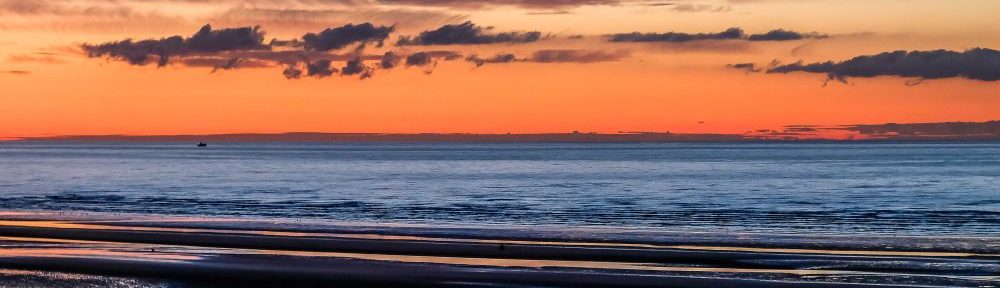
In my practice to date, primarily concerned with landscape, I have tended towards a pictorialistic approach to taking photographs – I have wanted to capture the mood and shape of the scene and create from that a relatively faithful image that will draw the viewer into what is there. Graham Clarke describes the work of Peter Henry Emerson (1856-1936) a central figure in pictorialism, as being in the tradition of painters such as Constable and Corot: “those painters dedicated to a literal, realistic rendering of the thing seen rather than a carrying on of received convention”1. In Emerson’s approach, “detail, light and formal composition of the scene are central, but it was the seen rather than the scene that remained crucial. The potential for a photograph lay in what was before the camera”2. I see much of my work to date in this light.
But there is a progression through the late 19th and early 20th centuries, particularly in the United States, where the landscape photography became on the one hand a portrait of the grandeur of the nation (for example Carleton Watkins, Ansel Adams) and on the other hand, a struggle to contain and frame the vastness of the land and uncover an inner meaning. Describing Edward Weston’s Dunes, Oceano (1936), Clarke speaks of the “larger mythology of spiritual and mysterious presence. [where] …the play of light and pattern, of texture and contrast expresses an almost metaphysical presence”3.
British Landscape photography, whilst still having roots in the picturesque traditions, has tended towards an increasing social awareness, perhaps reflecting the relatively more populous and industrialised landscape, and the fragility of the traditional idyllic view of the landscape. For example in the work of Fay Godwin, there are invariably human traces and a sense of questioning the interdependence of nature and humans. In the more recent work of John Davies, the landscape has become ever more industrial and the tension between rural and urban is palpable (for example Agecroft Power Station, 1983).
But I am particularly interested in the landscape work of Don McCullin, who is best known as a war photographer but has also produced a huge collection of black and white landscapes. In a video made in 2020 to accompany his exhibition The stillness of Life at Hauser and Wirth, Somerset, he describes his work as “winter etchings with drama” and he says that “for me the landscape has to have energy. I am trying to engage the energy of this landscape and record it on film and paper”4.
I feel a strong affinity with this sense of trying to engage the energy that is in nature and channel it into my work.
Over the last week I have looked closely at the work of 4 other photographers to understand how their very diverse approaches to image making.
Firstly, I have looked at the work of Dafna Talmor and her ongoing project Constructed Landscapes. She uses various techniques such as multiple exposure and collage, to create multi-layered images that gravitate between a mixture of real and virtual, which is surreal but also recognizable. In the text accompanying the images on her website, she describes this in more detail:
“In dialogue with the history of photography, Constructed Landscapes references early Pictorialist processes of combination printing as well as Modernist experimental techniques such as montage, collage and multiple exposures. While distinctly holding historical references, the work also engages with contemporary discourses on manipulation, the analogue/digital divide and the effects these have on photography’s status and veracity. Through this work, I am interested in creating a space that defies specificity, refers to the transient, and metaphorically blurs space, memory and time”5.
I am drawn to the drama of this approach, its cutting and slicing of reality to create a more intimate “new” space that connects the reality of the landscape with the inner self.
Secondly, I have looked at the work of Ingrid Pollard and in particular the series Pastoral Interlude from 1988. The series challenges the perception of the “idealised rural landscape”, ownership, economic development and English involvement in the slave trade. The images show black ethnicity people in rural environments and there is a heavy sense of uncomfortableness that resonates through them. Each image is accompanied by a short text that clearly articulate the alienation of the people from the setting (“feeling I don’t belong. Walks through leafy glades with a baseball bat by my side”6). The images are hand tinted, but the deceptive simplicity of the images (reminiscent of polaroids), together with the texts, carries a very heavy punch.
Thirdly, I have looked at the work of Beata Gutchow – The landscape series HC (Hortus Conclusus) might still be described as picturesque, and the images appear deceptively simple, until you realise that the perspective has been altered in all of them. The effect is disturbing. As Fergus Heron says in his essay Built Worlds: Photography, landscape and different natures, “the sense of unease in these works is produced through correspondence between form and content; depicting place that seem somehow both ancient and modern, strangely familiar and therefore unsettling”7. This is an interesting use of post-production manipulation to take the viewer from their comfort zone and force them to re-evaluate their own view of reality.
Finally I have looked at the work of Jason Orton and a very recent exhibition at the Photographers’ Gallery in London (August 2021): Jason Orton – The New English Landscape. These works are in very subdued tones, almost dead-pan in their aesthetic, as if the image itself is not as important as the place and the setting. His biography describes how he uses photography “to develop an understanding of landscapes” and “what we value within a landscape, the ways in which we connect with the landscapes around us, and the interrelationship between landscape, history and memory”8.
In summary, it is clear that there are many different approaches to landscape photography with hugely different levels of intervention from the initial landscape photo to the final image, from the very abstract (Dafna Talmor, to multi layering (compare also Helen Sear), to the more direct but still very powerful (Don McCullin). I’m not sure yet which is the route I will take but I am far more aware now of how grat photographer’s look beyond the landscape itself and into the very fabric that defines it.
Other photographers still to explore are Jem Southam, Richard Mosse and Guy Moreton
Notes
- CLARKE, Graham The Photograph (New York: Oxford University Press, 1997) p51
- Ibid p51
- Ibid p63/64
- MCCULLIN, Don The Stillness of Life, Jan-Sept 2020 https://www.hauserwirth.com/hauser-wirth-exhibitions/26511-don-mccullinthe-stillness-life/
- TALMOR, Dafna, http://www.dafnatalmor.co.uk/constructed-landscapes-text.html
- POLLARD, Ingrid Pastoral Interlude 1988 http://www.ingridpollard.com/pastoral-interlude.html
- HERON, Fergus 2018 https://thephotographersgallery.org.uk/photography-culture/built-worlds-photography-landscape-and-different-natures
- ORTON, Jason 2021 The New English Landscape https://thephotographersgallery.org.uk/photography-culture/jason-orton-new-english-landscape and https://jasonorton.com/info