It is quite clear to me at the moment, that I have not really adopted specific methods or methodologies in my work, and I don’t work particularly with a “project” in mind, except in the broadest terms.
So I would categorize my photographic archive to date in the following way:
- Family Album and Holidays – not intended for public dissemination but it’s a rich archive of memories, family history, events, travel and places – interestingly, as a family we have very few “family” photos from the 60s- 90s as they were rarely taken, and no “cinematic” footage. BUT, I have carefully catalogued old photos of long dead relatives from the family tree as genealogy was a passion of my father’s. Its critical to identify and write names against the people in the photos as they are remarkably quickly forgotten within the family (even back just one or two generations). For me the photos bring alive the social history of the family beyond just names in a tree, and it would be interesting to take this archive further at some point.
In contrast to this, families these days have myriads of photos either on phones or in social media – whole lives lived and recorded in minute detail – is this a good or bad thing – what will those people who’ve grown up in this culture look back and feel about it – is it a gross intrusion of privacy, who own’s the intellectual property, now or in years to come?
Into this category too goes holidays with friends, university, early work.
But see “books” below for what digital storage has changed in my approach to “family” photography.
- Travel – I am passionate about travelling and getting to see new places. I’ve always be interested in photography and carried a camera with me, but before the arrival of digital, most photos ended up in albums that in the end were rarely looked at. I’ve taken the best memories and digitalised them, but hoards of photos remain in dusty albums. They are a personal archive of memories in themselves and one day I will try to do more with them. Since having a digital camera, they have been much easier to store – but as I look back through them they are a random collection of travel photographs – much in the style of recoding places and people, than trying to convey cultural understanding or awareness or sheer pleasure in being there.
- Printed Books – I have found the ability to self-publish photos in books (using Blurb and similar) transformative in how I look at and approach photography. Whilst I can still be annoyed when someone asks me to “take a photo” of something, actually knowing that I want to publish a book of a holiday, or trip or event at the end of it – gives me a much better framework to think carefully about the photos I’m taking – I do want the result to be a memory for everyone involved, but I want do it to be a visual feast as well, and to portray the event in the best possible way that I can. With elderly parents, fading memories and time running short, I now see these books as critical family documents that will hopefully provide enjoyment for future generations as well – and to some extent, a family’s social history within the bounds of the family itself.
- Landscape (in a broad sense) – I am passionate about getting out in to the countryside and recording photographically what I see and find there. In this area, my heroes are the great landscape photographers of the past (Ansel Adams…) and of more recent years (Michael Kenna, Brett Weston, (son of Edward Weston) and David Brooker)). But in saying that I cannot say that I have studied any of them in depth or tried to emulate their styles directly. It is more that I am aware of their work (and would jump at any chance to see it directly rather than in books) and it’s the level of technique and insight that they bring to all their work that inspires me to want to get outside and take photographs myself. It is only as a result of starting this course that I have really starting to think about their “methods” and “concepts” and technical skills and how they deploy them, and I would like to pursue this much further now.
But I sense that landscape photography in itself is not enough in contemporary photographic world – I love the rich colours and senses that the countryside abounds with and I do want to be able to “capture” these attributes and use my photography to bring other to the same landscapes (and open window, not a limited view finder). But I am acutely aware of the fine line between “art” and “postcard” – and I need to work much harder now to bring something far more passionate and compelling into my landscape work.
I work in both colour and black and white in my landscape work. There is so much astounding variety of colour in nature, in all its forms, that it deserves to be preserved as such. But I do find that black and white photography brings out a completely different personality of the countryside as it necessarily focuses on shape, texture, relationships, patterns etc. And I find that its more challenging to look harder and sharper to find those intrinsic attributes and bring them to life. This is where I would like to focus a lot of my creative time over the next two years.
- Black and White – over the last few years my photographic output has shifted from colour to black and white and with it a great sense of creativity and abstraction. This is the area where I know I create projects for myself – and much more defined methods or approach.
My typical projects, and the way I tend to group photographs in my own archive is:
Trees and woodland
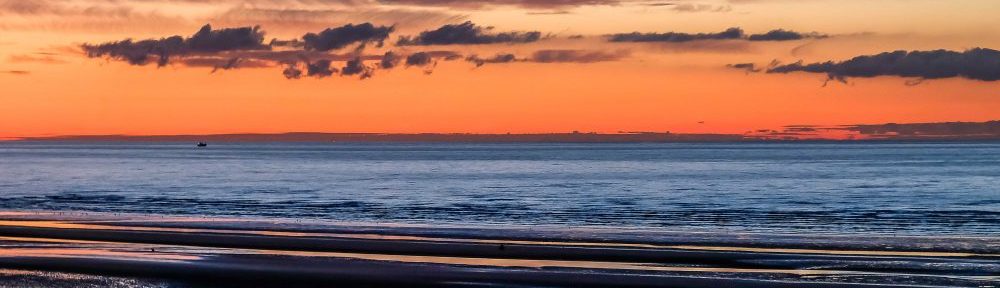
Seascape, coastlines
Flowers – often macro
Wildlife
I am not an artist in the sense that I can draw or paint. Photography is the medium for my artistic output, and at the moment I find black and white photograph offers me the most creativity. I am intrigued by how looking at “mistakes” in photos actually creates a wealth of opportunities in itself and I definitely want to explore the camera’s functions themselves now artistically, rather than having to rely on post-production. In this area as well, I feel I can organise my thoughts most coherently in terms of concepts and methods and I will work on this.
- People and Portraits – I have never really tried to take pictures of people in a serious and methodical way. I think this is a shyness and lack of trust in my own ability that makes me hold back from this. However, as part of this course, I would really like to undertake some training in portraiture work.
I’m happy taking more candid pictures of people though and strangers and where I’ve been asked to photograph people’s weddings, I make it clear that they may get a very personal view of events. But I actually enjoy these events in the end – perhaps because its carte-blanche to photograph people who generally want to be photographed and are relaxed in their surroundings.
- Dissemination – Up to now, I have only ever thought of my work as an overall archive of what I enjoy photographing. It has not been meant to tell a story in any way, other than in its own reference in time. It had no obvious audience. But as I look now more at how contemporary photography practice is organised it is clear to me that in making work more public the pattern is through defined projects, displayed in exhibitions, art installations, books (and less targeted perhaps in websites, blogs, Instagram etc). I can visual projects as being stand alone or within greater overarching themes that may or may not overlap.
Opening a Photographic Studio recently (www.guildhallstudio.com) was a radical step for me as if forced me to think about the body of my photographic work and what its over-arching themes actually are, and what I wanted to say in displaying them. I will explore this much more in a later journal entry as I think this will form part of my major project in due course.
Final Thoughts
- Work within defined projects – consider the concept for the project and think about the right methods to achieve its aims; but don’t be afraid to change course on the way, and keep reflecting on how its developing to see if there’s a better process or direction.
- Look at a number of photographers in more depth – what are the concepts and methods behind their body of work.
- Portraiture – make it a challenge to become more proficient in the techniques of good portraiture and produce a portfolio of insightful work.
- Try working out of the box – set up some random challenges to see where they go. Let chance play a role.
- Try out techniques exploiting the camera’s capabilities – not be bound by them. Forget the rules of composition, exposure, etc and see what happens.