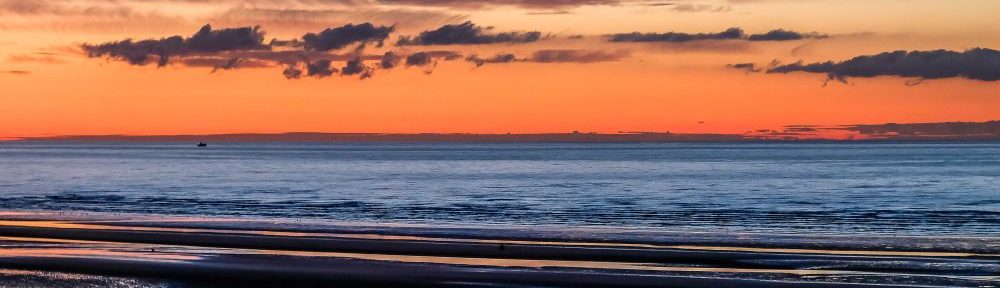
I have always been interested in Art as well as photography, particularly the English landscape artists such as Turner and the Impressionist painters such as Monet, Manet, Van Gogh, and Pissaro. I am drawn by their use of paint and light to expose the richness of the colour and texture in the landscape itself.


I have also spent a lot of time studying the Surrealist movement: in Art, the work of Picasso and Dali for example, and in Photography the surrealistic work of Man Ray, Brassai, and Eugene Atget. I particularly like the early surrealistic work of Henri Bresson-Cartier, who said: “I owe an allegiance to Surrealism, because it taught me to let the photographic lens look into the rubble of the unconscious and of chance”. Similarly, Andre Breton described Surrealism’s aim as being to “resolve the previously contradictory conditions of dream and reality into an absolute reality, a super-reality”, or surreality.
Here, I’m fascinated by way that these artists all challenged the viewer to reject any comfortable sense of normality and confront a disturbing alternative version of reality, drawn from the subconscious.
Andre Breton described Surrealism’s aim as being to “resolve the previously contradictory conditions of dream and reality into an absolute reality, a super-reality”, or surreality”1.
There is a similar challenge presented by the Theatre of the Absurd, which was heavily influenced by Existentialist philosophy – why am I here? what is the point of life? The typical protagonist of the Theatre of the Absurd is a loner, an isolated outsider and Samuel Becket’s Waiting for Godot (1952) by Samuel Beckett has two such typical characters in Vladimir and Estragon, who are tramps on the edges of society, having and needing each other, but never really able to communicate successfully with each other.
Music has had similar challengers, perhaps best illustrated by the Sex Pistols in the 70’s and within “classical” music, the “silent” music of John Cage – a severe rejection of traditional output with a radical, often anarchic alternative.
The key point in all of these artistic movements is the challenge against a comfortable and complacent acceptance of the status quo. Many photographers have done the same and continue to do so, such as the disruptive street photography of the Provoke Movement.
I am fully aware that much of my landscape photography is at the “picturesque” end of the photographic landscape spectrum and I do now want to explore moving away from this, particularly in my work for the MA.


Lake Scene, Evening 1792 (Tate Modern website http://www.tate.org.uk)
But I have no intrinsic problem still searching for the “sublime” in nature and trying to capture those moments in nature where its full force is unleashed, as I think these moments are for every generation to re-experience and re-interpret.
That said, I am starting to look more at the more contemporary concept of Edgelands2, and the tension that arises when nature and society collide, and how, if ever, that tension may be resolved. A good of example of the idea of Edgelands is in the work of Mark Power:

Part of the project I will do over the next few weeks will be to look at the seafront at Felixstowe and to explore how it has been shaped to accommodate a wide range of human activity – container seaport, nature reserve, pier, promenade and sea defence – and to document the people whose daily lives interact and with this landscape.
Notes:
1. Andre Breton, Manifeste du surrealisme, various editions. Bibliothèque Nationale de France.
2. Alexander, J. (2020) Perspectives on Place: Theory and Practice in Landscape Photography. Oxon: Routledge. pp83-85.