21 04 18 The Ethical Triangle

One of the most important features of this course for me so far has been how much it has forced me to question why I take images, what I’m trying to say in those images, and whether they are successful or not in delivering the intended message. But more importantly, its taught me that I’m not the only protagonist in the process – there is also a place, a time, and an audience at the moment the image is viewed, just as there was a place, a time and a photographer at the point of taking the image. And on both occasions, there was a social, historical and cultural overlay (and you could include many others adjectives here to – racial, sexual, emotional, psychological), mostly subconscious and, certainly in my case, woefully under-considered.

I will consider more broadly the notions of “spectator” and “gaze” in a later post, but here I want to consider specifically one aspect of the Author, Subject, Audience triangle, namely the ethical dimension.

Since a lot of my work is about landscape, people do not often figure directly in the images, but they are often there, indirectly, as part of the composition. I am aware that I often use people to provide physical perspective in the images, or to illustrate a particular “use” of the land. The photograph below is a good example of this. It’s a typical beach scene on the promenade at Felixstowe, but it could be almost anywhere, and it’s part of the body of work I’m developing about how people interact with and mould, the land and coast around Felixstowe.

John Martyn: Felixstowe, March 2021

In taking this image, I am aware that I’ve not singled out any individual that might be readily identifiable; it’s a generic scene showing lots of different activity and it’s the collective image that’s important, not any individual in particular. But those choices are deliberate here. Even walking around with a camera you can get noticed quite quickly and I’m conscious that I don’t want to be seen to be voyeuristic. If I do come across someone I really want to photograph individually, I try to engage with them first, even though that can break the spontaneity that I might have wanted to capture. Occasionally I’ll take the image first and make contact afterwards if it appropriate. But there are definitely times when I back off from taking an image if I think it’s too intrusive. In my mind it comes down to a point on a spectrum between empathy and exploitation, and the tricky ones are those on the borderline – and that’s when I think you are bound to speak to someone if you think you have “stolen” something from them, for which you need their permission.

Susan Sontag is right on two counts here and her words sit in the back of my mind on these occasions:

“…. there is something predatory in the act of taking a picture. To photograph people is to violate them, by seeing them as they never see themselves, by having knowledge of them they can never have; it turns people into objects that can be symbolically possessed”.  Susan Sontag, On Photography.

“To photograph is to appropriate the thing photographed”. Susan Sontag, On Photography.

But what of the audience? Context is everything in the interpretation of an image by a viewer. Often it is ambiguity in an image that makes it interesting and deliberately invites a wide range of interpretations, and in most artistic work, I think that’s perfectly acceptable. But there is a fine divide between an image that purports to show one thing and actually shows something very different, if that difference is deliberate and intended to mislead. The embargo on the alteration of news images is a good example (though even then, cropping can make a big difference even if it doesn’t alter the content of the image itself). More subtlety perhaps, Steve McCurry has come in for criticism for the image of the “Afghan Girl” which, although widely acclaimed at the time, was taken in circumstances that were not necessarily as clear cut as was assumed at the time1. Similarly the image of the “The Falling Soldier” by Robert da Capa has been questioned several times concerning its authenticity (see https://www.theguardian.com/world/2009/jun/14/robert-capa-spain-photography).

In all these cases, I think that the photographer, in the choice of subject for an image, in taking the image and in displaying it (in whatever form), does have an overriding ethical duty to be truthful in their representation of the image, and, where appropriate, sensitive to the subject matter, not degrading it, patronising it, or misrepresenting it. This approach does not in any way need to curtail creativity, but it should inform it.

Note 1. The story about concerns regarding this image were voiced by Tony Northrup on his youtube channel in March 2019 (https://www.youtube.com/watch?v=RuFKpaV_jjo). There followed contact from representatives of Steve McCurry and the video was taken down. The video was reinstated a week later with one correction and a much longer list of sources, together with an explanatory video https://www.youtube.com/watch?v=1q_NAEaiC9M. Northrup essentially confirms the voracity of the original video but with some clarification. It’s an interesting, cautionary tale in its own right about getting sources correct and providing the references for those sources.
21 04 05 Land and Landscape

“It is difficult to escape the feeling that we are all “insiders” now, alarmingly aware of the finiteness of the natural resources we used to take for granted as Nature’s endless bounty. We don’t have to imagine, with the aid of alluring images of Arcadian natural simplicity, what it must have been like to live in Nature; we are all too aware of our dependency on Nature now. More crucially still, we feel Nature’s dependency on us”1.

I have been writing my Illustrated Proposal recently and the underlying theme of this is the conflict between the land itself and the exploitation of that land by human activity. I am interested in how that exploitation shapes the land, and creates a constant tension between “rural” and “urban”, particularly where the two collide, on the Edgelands2. I am interested in this from an environmental standpoint, the fragile (im)balance that increasingly weighs towards over exploitation, but also from a photographic standpoint, how the land is represented by different photographers and why they choose the approaches in their work that they do.

As part of this I have starting looking again in more depth at a number of late 20th century “landscape” photographers, for example, Fay Godwin, Helen Seers, Robert Adams and Don McCullin.

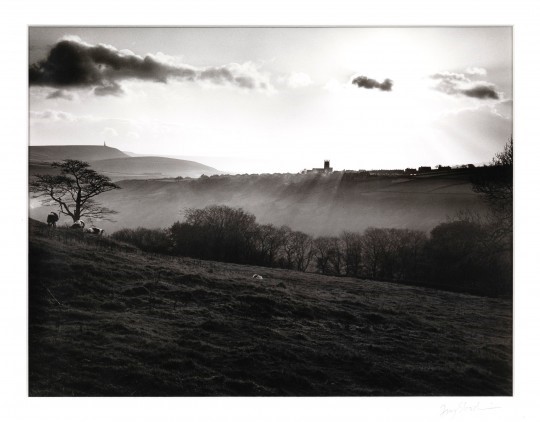
Fay Godwin was a passionate campaigner for open access to the land and was President of the Rambler’s association from 1987 to 1990. Her passion for landscape grew from her love of walking and many of her images evoke the quintessential beauty of the countryside.

Fay Godwin, Heptonstall © Collections/Fay Godwin/BL

But she also campaigned for better access to the countryside for everyone and her book “Our Forbidden Land”3 explores her passion for the environment and the damage so easily inflicted on it. What I like most about her work is how she captures the essence of what she sees with a striking directness of purpose. Nothing in the image is wasted. In her obituary in the Times of 31st May 2005, she was quoted as saying “I’ve been called a Romantic photographer and I hate it. It sounds slushy and my work is not slushy. I’m a documentary photographer, my work is about reality, but that shouldn’t mean I can’t be creative”4.

She also has some disparaging things to say about the picturesque genre of art, which is certainly not how one would describe her own work. “The problem for me about these picturesque pictures, which proliferate all over the place, is that they are a very soft, warm blanket of sentiment, which covers everybody’s idea about the countryside….It idealizes the country in a very unreal way”5.

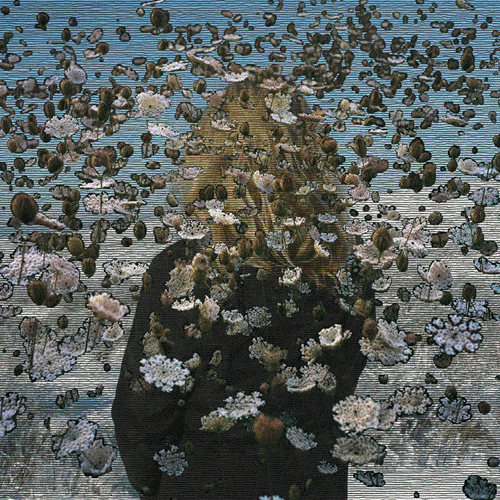
Whilst Fay Godwin is always known as a “Landscape” photographer and worked almost entirely in black and white, Helen Sear is known for the great diversity of her work and the colourful visualisation of the natural world, as she explores themes of “vision, touch and re-presentation of the nature of experience”6. What I enjoy most about her work is the inventiveness of her methodologies and the use of different media (not just straight forward photographic images) to explore the world. For example, in her series “Beyond the View”7, she overlays portraits and landscapes with other images and textures from nature, creating mysterious and often haunting images of women hidden in the landscape.  

I find these images inspirational in thinking about how I want to portray the landscape, challenging me as a photographer to think much harder about how images work, how to engage an audience that is often tired of clichéd images of traditional picturesque scenes, and how to find an original voice to challenge complacency in the face of environmental damage and waste.

Notes

  1. Andrews, M. (1999) Landscape and Western Art. Oxford: Oxford University Press, pp22.
  2. Alexander, J.A.P.  (2015) Perspectives in Place: Theory and Practice in Landscape Photography. London: Bloomsbury, pp83. Also, Farley, P and Symmons Roberts, M. (2011) Edgelands: Journeys into England’s True Wilderness
  3. Godwin, F. (1990). Our Forbidden Land. London: Jonathan Cape.
  4. The Times, Obituary, 31st May 2005. From the website www.faygodwin.com.
  5. Godwin, F. Southbank Show. Produced and directed by Hilary Chadwick, London Weekend Television, 1986.
  6. www.klompching.com/helen-sear-home
  7. Sear, H. (2008) Beyond the View. www.helensear.com/portfolio/beyond-the-view/

21 03 28 Photographs help to Rebuild Lives

I came across the following article by Samatha Clark on the NPR website the other day – “10 Years Later, The Rescued Snapshots Damaged In Japan’s Tsunami”1.

The article recalls the devastating earthquake and tsunami in March 2011 that struck the coast of Japan following the Fukushima Daiichi nuclear plant disaster. Around 20,000 were killed and half a million people were forced from their homes. Her article though is about a project called Lost and Found Project by Japanese photographer Munemasa Takahashi which grew out of an earlier project called Memory Salvage. The aim of this project had been to collect and preserve hundreds of thousands of family photographs that were scattered amongst the debris of the tsunami, in an attempt to return them to their previous owners. This was an important project in its own right, underlying the importance of photographs in preserving memory and moments in cherished lives. As Clark says: “

“Together, these images chronicle not just family history but the momentous and mundane moments of everyday life that were deemed important enough to document. We make and keep family photographs, one of the most important genres of the medium, as a way to remember and define who we are. For families rebuilding their lives after the tsunami, these kinds of images hold a special meaning”1.

Source: the website article at Note 1.

The purpose of the Lost and Found Project was to take the images and create from them a memorial to reflect the emotional trauma unleashed by the effects of the tsunami. By bringing the images together, Takahashi underlines the poignancy not of momentous events in themselves, but of the everyday events in people’s lives that they once chose to record as personal memories and are now preserved as a collective memory to be shared by survivors and the public alike.

Reflecting on the general disdain with which the ubiquity of social media photography is greeted these days, it is worth remembering that there is still huge value in the capacity of images to record important events in people’s lives, particularly when those lives may be suddenly and unexpectedly lost. As Nathan Jorgenson says in The Social Photo, “The social photo’s central importance is the degree to which the image’s frame, the media object itself, has dissolved away, leaving behind the substance of life and experience”2.

But it is also good to see a very human side to photography and its ability to preserve memory. I have a large collection of old family photos from the 1920’s and 30’s which previously I might have left in a cardboard box unseen. But this project is a good reminder that those photos represent moments in people’s lives that they chose to record themselves and it would be a very worthwhile project to bring them back to life in an organised archive, even if only as a recollection of family history for future generations.

Images from the family archive.

Notes:

1) Samatha Clark is a writer and photo editor based in Washington D.C. Her full article can be found on the NPR website  https://www.npr.org/sections/pictureshow/2021/03/10/973020150/10-years-later-the-rescued-snapshots-damaged-in-japans-tsunami?t=1616955605404.

2) Jurgenson, N. (2020) The Social Photo: On Photography and Social Media.  London: Verso, pp24.

21 03 21 Reflections on Audiences and Institutions

The Social Photo

The rise in the proliferation of social media channels has undoubtedly changed the dynamics of the photograph and its use in society. Whereas previously photography might broadly have been categorised into the well-known “professional” channels of documentary, portraiture, fine art; and “amateur” ones of family album, holiday snapshot and keepsake, there is now a whole new stream of consciousness in the form of social media photographs, epitomised by the selfie. But what makes this last, new category, stand out is that the it is no longer the photo per se which is the central player – photography has emerged as a means of communication as never before. As Nathan Jurgenson says in “The Social Photo”, “photography has gone from being a medium for the collection of important memories to an interface for visual communication”1, and “….there is a fast-evolving literacy in the circulation of images as communication”2.

In my mind this transformation of photography into a means of mass communication is generally to be welcomed, particularly when Jurgenson goes on to say that “social photography excels in the everydayness of ordinary communication which is anything but trivial”3. If history records the late 20th century and early 21st century as the dominance of image over writing, so be it; no doubt trends will change again, but the visual record will be stunning and something for sociologists to pour over for years to come. That is not to say that it is all god though. I suspect that many people’s lives will be haunted by the proliferation of images that they have either taken of themselves or that have been taken by others, and which are all but impossible to delete permanently. The dreadful use of images of (mainly) women for blackmail or revenge is awful, and there are many examples in the press where risqué images taken years before have come back to plague people’s lives in job interviews, new relationships public life.

There is no denying that the use of the social image is more now than just the publication of an “image” – it is a whole process of story-telling in often minute and intimate detail, the replacement of the written diary. And whether this comes to be seen as a process of documentation of heightened nostalgia, or overt narcissism, it cannot be denied that it has created an enriched cultural landscape.

“The social photo’s central cultural importance is the degree to which the image’s frame, the media object itself, has dissolved away, leaving behind the substance of life and experience.”4

But perhaps people should also bear in mind Susan Sontag’s words of warning in “On Photography”, which Jurgenson also quotes:

“There is something predatory in the act of taking a picture. To photograph people is to violate them, by seeing them as they never see themselves, by having knowledge of them they can never have; it turns people into objects that can be symbolically possessed”5.

Audiences and Institutions

I think that most photographer’s dream of having their work exhibited at some stage. Again, social media platforms have made this infinitely easier now, with the proliferation of on-line media outlets such as Flickr, Facebook, Instagram and websites generally, all with the ubiquitous capacity to provide instant gratification or depression through likes, and comments.

But whilst these are mass, on-line outlets, I still prefer the physicality of a gallery or studio and being to present photographs in the form they were intended, and appropriately sized and exhibited, particularly where this leads to interaction with the public audience directly. Whilst I have produced many photograph albums either for family or friends, I still enjoy the experience of walking around a gallery being able to take time to contemplate the works on display. And having opened a studio myself now, it’s a privilege to be able to show my own work and enter into a dialogue with the public.

And I’ve sold many photographs in the is way as well now – which is always a gratifying conclusion – to know that someone else has enjoyed a work enough to want to buy it and display it themselves. But does this make me a professional photographer? I think that if you make your living as a photographer then that is as good a definition of a professional photographer as any, but I’m also pretty sure that I haven’t sold enough yet to say that it is my living.

I think that Grayson Perry’s observation in “Playing to the Gallery” is perhaps more apt though: “Validation from your peers is a lovely accolade to have”6. But there is more than a touch of irony in his comment here, and he is undoubtedly more sincere when he says that “..perhaps the greatest accolade you can give a work of art is to say that it is of ‘museum quality’7.

And short of opening my own museum, perhaps that the goal that I should aspire to, and coming not long after the curated show, the book launch and the retrospective. Now, where’s my camera….!

Notes

  1. Jurgenson, N. (2020) The Social Photograph. London New York: Verso. pp13.
  2. Ibid pp15.
  3. Ibid pp16.
  4. Ibid pp25
  5. Sontag, S. (1977) On Photography. London: Penguin Books, pp14.
  6. Perry, G. (2016) Playing to the Gallery. UK, US and others: Penguin Books, pp25.
  7. Ibid, pp29.

21 03 15 Reflections on Words and Pictures

In his August 2010 Article in The Guardian, the writer Sean O’Hagan quotes the following from Robert Adams:

“For photographers, the ideal book of photographs would contain just pictures – no text at all” photographer Robert Adams once wrote. He went on to admit that he “once worked through more than a hundred drafts of a four-paragraph statement for a catalogue, all to find something that would just keep out of the way of the pictures“.

Source: https://www.theguardian.com/artanddesign/2010/aug/04/writing-about-photography-robert-adams

This view of “words” generally “getting in the way”, generally sums up my own view of words used in the context of photographs. But there are definitely exceptions as well, where the words can and do add an important function.

Barthes makes the point even more strongly that words can be downright damaging when accompanying photographs:

“…the text constitutes a parasitic message designed to connote the [photographic] image, to “quicken” it with one or more second-order signifieds. In other words, and this is an important historical reversal, the image no longer illustrates the words; it is now the words which, structurally, are parasitic on the image”.     The Photographic Message in BARTHES, 1977: 25.

Generally I am not a fan of captions or even titles for works, other than possibly a reference to location and date taken, if this makes sense in the context. I normally prefer the photograph to speak for itself and to allow the viewer to find their own way into the photograph and explore meanings for him/herself.

But in the right context, I’m not sure that the relationship between words and image should necessarily be a “parasitic” one, with very negative overtones.  Naming images can be a fraught task, and it’s not surprising that many images end up as “untitled” which has become a cliched label in itself now. But there is no doubt that a well-chosen title does add to the meaning of an image – and provides context, which can be important, just as a biography of a photographer provides overall insight into the photographer’s work, and an introductory narrative to a body of work helps to explain the photographer’s motives. It’s a matter of balance and careful location of the words, so that they provide insight, but don’t distract.

In looking at photographs for this post, I came across the work of UK artist David Shrigley – ‘Stop It’, David Shrigley OBE, 2007 | Tate (Links to an external site.), and www.davidshrigley.com. (Links to an external site.)

He seems to deliberately use captions in an ironic and playful way, such as the following example. To me this is either a perfect illustration of Barthes parasitic relationship, or an ironic take on it, or perhaps both.

My favorite example of an image incorporating text explicitly though, is one below by the Finnish Artist, Elina Brotherus. She was living and working in Paris at the time, struggling to learn the language, and feeling isolated.  This is a playful reflection on that language learning process.

Interestingly, Eugene Ionesco (“Theatre of the Absurd”) wrote a play called “The Bald Primadonna” (1950) made up entirely of words and quotes from an English language learning book – it was his first play and was a critique of the failure of communication and language in many situations. 

Elina Brotherus Le Nez de Monsieur Cheval (1999). From: Cotton, C. (2009) the photograph as contemporary art. London, Thames and Hudson. pp164.

In the same article quoted at the beginning of this post by Sean O’Hagan, he later quotes the following by Stephen Shore in his “artist statement” for his first book “Uncommon Places”, published in 1982.

“As I wade a stream, I think wordlessly of where to cast the fly. Sometimes a difference of inches is the difference between catching a fish and not. When the fly I’ve cast is on the water, my attention is riveted to it. I watch the fly calmly and attentively so that when the fish strikes, I strike. Then, the line tightens, the playing of the fish begins, and time stands still. Fishing, like photography, is an art that calls forth intelligence, concentration, and delicacy.”

As well as being a beautiful piece of prose that captures the essence of the photographic process, it seems to me that this is a good illustration of why words can be important in photography, explaining the process, but not necessarily impinging on the later images themselves.

For me, an image is definitely “worth a thousand words”, but sometimes some well-chosen words can and do provide support and clarity. It would also be worth looking in the future at the opposite case where there are words and no images despite being a book about photography, such as Susan Sontag’s “On Photography”.

21 03 13 Thomas Joshua Cooper

I have been looking this week at the work of Thomas Joshua Cooper. Although born in California in 1946, Cooper has lived for many years in Scotland and is the founding head of Photography at the Glasgow School of Art. The website www.inglebygallery.com (from which the images below are taken) describes Cooper as “…a traveller, a nomadic artist whose extraordinary photographs are made in series at significant points around the globe, most often at its extremities”. Cooper produces his work using an antique wooden field camera from 1898 and printed by himself as selenium toned silver gelatin prints, only ever producing one image from the negative. His photographic process is to choose a site on a map, research it and then track it down. For example, his 1989 project called An Atlas of Emptiness and Extremity was inspired by Magellan’s circumnavigation of the world.

The resulting photographs have a very contemplative, surreal quality. But these are not traditional landscape images presenting a panorama of particular location; they have an almost abstract, intimate quality, revealing the essence of the location.

EAST-MOST – LOOKING TOWARDS SCOTLAND – THE NORTH CHANNEL AND THE IRISH SEA – BURR POINT, THE ARDS PENINSULA – COUNTY DOWN, NORTHERN IRELAND – THE EAST-MOST POINT OF IRELAND, 2013

I particularly like the work from the 2014 exhibition at the Ingleby Gallery in Edinburgh entitled “Scattered Waters: Sources, Streams, Rivers”. This is a collection of photographs of rivers and streams in Scotland and again the mood is serene and contemplative. I like the idea that the viewer is left to contemplate the scene in their own time – there is nothing hurried about these images either in the way that they have been photographed or in how they are presented to the viewer. There is a timeless quality about them.

Evening -The River Dee
Portarch, Banchory, Kincardineshire, Scotland, 1997/2014

This is an approach to landscape photography that I would like to explore in my own work – moving away from the picturesque, or even sublime, and focussing on essence of the natural world at that moment in time and at that specific location.